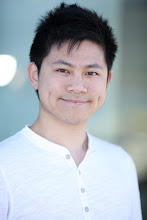
So as a project for the HDI block in our DPAS course, we have to film a skit, a song or poem to present to the whole class. Our team would encompass our tutorial members and there's 8 of us. Each team is given a microorganism and they have to try to explain/give hints as to what the organism is without actually mentioning the name anywhere. It's up to the rest of the class to guess our organism. I can't tell you which organism we did just yet. Secret.
We made a parody to Coolio's Gangsta's Paradise and changed all the lyrics to describe our bacterium. After 8 shots, we nailed it and had a running copy. It was really fun for all of us and we were quite pleased with ourselves afterwards. I personally love rap music. And who knew I could be a rapper vicariously through being a full-time med student. The best of both worlds.
Thursday, January 21, 2010

Tuesday, January 19, 2010
Surrey Office Visit #2
I am seriously estatic that I have such a wonderful preceptor and Dr. Baker has failed to disappoint. I got to do my first breast exam today. It was a little awkward at first and it was hard for me to look the patient in the eyes while I was doing the exam, but I got over it quickly. They say a lot of guy med students find it hard to contain their sexual arousal upon being exposed to a random woman's breasts. I don't think it was a huge problem this time since the patient was quite old in age. I still don't know how I'll react, had the woman been younger.
I was also fortunate to use an ultrasound to find the heart beat of the fetus in a pregnant girl. It's just like using a metal detector to look for long lost treasure. Once you find something, the small hand-held doppler instrument makes a cool swooshy noise. I know, I get off on the silliest and most trivial things. I was also given the opportunity to preform cyrotherapy (using Nitrogen to freeze off flat warts) and partake in a minor surgical procedure to remove a papule for testing.
The experience that was most profound for me was helping with a 1st prenatal visit. I realized I had made a huge assumption at the beginning, that this girl came in with full anticipation and eagerness to support the baby. I was instead confronted with a 17 year old who only recently found out she was 21 weeks pregnant. I say to myself that I have nothing against teens getting pregnant as I understand everyone has their own prerogatives and issues. However, I was quite stunned and I didn't know exactly how emotionally involved or challenging my questions had to be with her. I've only met her for a few seconds now, she's very shy and closed off, so how can I possibly without knowing her just jump into asking her whether she wants to keep the baby or not. I'm sure this is a hard skill I will need to learn as a future physician and it's probably my role to ask these hard questions. I realized my utter lack in training and experience in this realm of medicine where I gotta deal with awkward situations. At the end of the day, I was glad my preceptor challenged me and asked me to hash out the feelings and emotions that were going on inside me while I was alone in the room interviewing her. I realized first hand how important it is for me as a future physician to analyze and understand my own reaction to such issues so I can properly respond in such situatins without being simply flabbergasted. Laying it all out on the table, I realized that I wasn't as comfortable personally as I thought with teens getting pregnant at such an early age despite personally knowing a very good friend of mine get his girlfriend pregnant in highschool and going through with the delivery. I guess it's different when you're only a bystander watching things like these happen. Once you're the physician, you're thrown right into the whole thing. I defintely found the conversation to be awkward, the girl was very closed off with her body language (no eye contact, flat expression) and one-worded close-ended responses. A tough day for me and I know it must be even tougher for the patient. All-in-all a great experience for me.
I was also fortunate to use an ultrasound to find the heart beat of the fetus in a pregnant girl. It's just like using a metal detector to look for long lost treasure. Once you find something, the small hand-held doppler instrument makes a cool swooshy noise. I know, I get off on the silliest and most trivial things. I was also given the opportunity to preform cyrotherapy (using Nitrogen to freeze off flat warts) and partake in a minor surgical procedure to remove a papule for testing.
The experience that was most profound for me was helping with a 1st prenatal visit. I realized I had made a huge assumption at the beginning, that this girl came in with full anticipation and eagerness to support the baby. I was instead confronted with a 17 year old who only recently found out she was 21 weeks pregnant. I say to myself that I have nothing against teens getting pregnant as I understand everyone has their own prerogatives and issues. However, I was quite stunned and I didn't know exactly how emotionally involved or challenging my questions had to be with her. I've only met her for a few seconds now, she's very shy and closed off, so how can I possibly without knowing her just jump into asking her whether she wants to keep the baby or not. I'm sure this is a hard skill I will need to learn as a future physician and it's probably my role to ask these hard questions. I realized my utter lack in training and experience in this realm of medicine where I gotta deal with awkward situations. At the end of the day, I was glad my preceptor challenged me and asked me to hash out the feelings and emotions that were going on inside me while I was alone in the room interviewing her. I realized first hand how important it is for me as a future physician to analyze and understand my own reaction to such issues so I can properly respond in such situatins without being simply flabbergasted. Laying it all out on the table, I realized that I wasn't as comfortable personally as I thought with teens getting pregnant at such an early age despite personally knowing a very good friend of mine get his girlfriend pregnant in highschool and going through with the delivery. I guess it's different when you're only a bystander watching things like these happen. Once you're the physician, you're thrown right into the whole thing. I defintely found the conversation to be awkward, the girl was very closed off with her body language (no eye contact, flat expression) and one-worded close-ended responses. A tough day for me and I know it must be even tougher for the patient. All-in-all a great experience for me.
Monday, January 18, 2010
HDI
Host Defence and Infection. With the new year ahead of us, we are no longer in PRIN (principles of human biology), but starting FMED. FMED is divied up into different 'blocks' varying in subject and length. I'm beginning to realize just how much information I will have to commit to rote memorization from now on. You can't get by anymore just by understanding concepts. All this new information is important and we need to have it accessible in our heads for practicality in the profession. I'm lacking the motivation to study and commit things to memory on the spot. Usually, I just read over something, understand it and save it for memorization later. I don't think it's gonna run the way I want it to anymore unfortunately. I definitely find that the faculty hasn't done a great job in organizing the lecture material and notes for us. The handouts for each lecture are not in the correct order, final revisions always need to be made on learning objectives and lecture notes are not all made ready for us prior. I guess the disorganization stems from the fact that we're in more specialized subject matters now and changes are more frequent due to changing material and lecturers from previous years. But I would imagine that they would have discovered how to manage this by now after so many years the medical school has been running.
Spent my weekend reading in a library. How boring. Common, I wasn't just reading lecture notes. Who do you take me for? For some reason, I find it a lot more motivating to read liesure books when I'm surrounded by lots of books and random people reading them. I'm sore all over from getting back into kung-fu. Went for a run today to keep the cardio up. A morning with extreme winds and rain. Sun comes up in the afternoon. 11 degrees outside and wind settles. No need for a jacket. Very cool, but warm with the sun's rays just landing on me. Best feeling.
Spent my weekend reading in a library. How boring. Common, I wasn't just reading lecture notes. Who do you take me for? For some reason, I find it a lot more motivating to read liesure books when I'm surrounded by lots of books and random people reading them. I'm sore all over from getting back into kung-fu. Went for a run today to keep the cardio up. A morning with extreme winds and rain. Sun comes up in the afternoon. 11 degrees outside and wind settles. No need for a jacket. Very cool, but warm with the sun's rays just landing on me. Best feeling.
Tuesday, January 12, 2010
Office Visits in Surrey
Start of a new term means new office preceptors taking us on for our family practice FMPR course. Leslie (my partner) and I are posted at a small walk-in clinic in Surrey under Dr. Baker. For those of you who aren't familiar with British Columbia, Surrey isn't rural, but it's quite far away from the city centre of Vancouver. Med students always say that they get to do more and see more when they're out in more distal cities during office visits. And it's true. Without having a slight idea about doing any clinical skills such as palpations and prostate examinations, Dr. Baker just threw us in there and guided us along on the fly. I learned today IPPA upon doing abdominal exams. Inspection, Palpation, Percusion and Ausculation. I observed pitting edema, auscultated for crackling sounds in the lungs an indicator for congestive heart failure and gave a 3 month old baby a shot. I felt the liver upon palpation on an adult and the kidneys on the baby. A lot of things on the first day and I'm glad to have Dr. Baker and the other friendly staff at the clinic.
At the end of the day, Dr. Baker told us that one of the challenges that comes with being a primary care physician is that of sometimes accepting the role as a faciltator for the health of patients rather than adamantly forcing patients to comply with a particular treatment or set of actions. It would be extremely hard and fustrating to "clean" someone up with a slew of medical problems including alcholism in particular circumstances. In that case, as primary care physicians, we can only do our best to minimize and eliminate potential suffering that would make life a lot more difficult for the patient to bear by treating what is easily treatable and most importantly, working with the patient in a way as to gain their cooperation in this process.
At the end of the day, Dr. Baker told us that one of the challenges that comes with being a primary care physician is that of sometimes accepting the role as a faciltator for the health of patients rather than adamantly forcing patients to comply with a particular treatment or set of actions. It would be extremely hard and fustrating to "clean" someone up with a slew of medical problems including alcholism in particular circumstances. In that case, as primary care physicians, we can only do our best to minimize and eliminate potential suffering that would make life a lot more difficult for the patient to bear by treating what is easily treatable and most importantly, working with the patient in a way as to gain their cooperation in this process.
Wednesday, January 6, 2010
DPAS Canadian Public Health
Today, we had an interesting DPAS lecture on the Public Health (PH) domain of the Canadian goverment. I kinda had an idea of what PH meant initially, but it was insightful to have some guest speakers come in and talk about their work in this domain. In Canada and its provinces, the medical profession is self-regulated by the respective provincial College of Physicians and Surgeons. The College's roles include certifying doctors to practice, monitoring and maintaining a standard of practice and has the power to investigate and discipline its members for professional misconduct or incompetence. Basically, it's a body created to bolster the fidelity and trust held between those practising medicine and the public. All this done, with the foremost intention of protecting and serving public interest. However, doctors don't simply answer to this self-regulating body, but also to the government both provincially and nationally through Public Health. Each province is divided into multiple 'health regions' as public health in Canada is primarily provincial jurisdiction with all regions operating autonomously and slightly differently depending on regional needs and geography.
Public Health, as you can tell from the name deals with health in a holistic perspective. The contrasting analogy made in lecture was that a doctor is to their patient, what a public health officer is to a population of people. Instead of looking at one patient, diagnosing their problem and ending with treatment, a public health officer has to look at a health problem in the context of a population and be able to discern the impact that one health variable can have on many people at once (ie. the spread of a contagious and dangerous communicable disease). Instead of looking at the symptoms of one particular patient, public health officers have to do meta-analysis with data to see the problem in its gross entirety.
There were some interesting things mentioned throughout the lecture by the various guest speakers who all have appointments in Public Health roles. Dr. John Carsley mentioned how simply putting suicide barriers significantly dettered the number of individuals who died every year who were in seirous comtemplation of commiting suicide on a particular bridge. It's strange why most people who want to commit suicide gravitate towards a particular bridge in the city despite there being many to choose from. It is Public Health that should recognize this and take measures to deter suicides simply by identifying the suicide-popular bridges and installing barriers. Another intersting thing, Dr. Howard Njoo, mentioned the importance that physicians who come across and identify individuals with serious communicable diseases that pose a safety threat to the public are required by law to report it to Public Health. If a physician is caught not doing so, they could be fined up to $100,000 or take 12 months in prison. In Canada, provincially, people who test positive for HIV must be reported in confidentiality to the regional Public Health office either nominally/non-nominally (full name disclosed/initials of name disclosed) along with particular demographic information. Basically, there has to be a means of identifying the individual diagnosed with HIV so that Public Health has the means to locate and contact the individual who may pose a threat to the safety of the general public. Finally, it was a honour to have Dr. Howard Njoo, Director General (3 steps below Steven Harper) of the Centre for Emergency Preparedness and Response of the Public Health Agency of Canada fly over from Ontario to speak to us. One of his convictions was that he would like to see the arbitrary barriers that have existed for so long which prevents doctors in Canada from easily practising interprovincially. Currently, if you're a doctor practising say in BC, you would have to go through the strenous process of acquiring a license to practise in another province in the SAME country. In other countries around the world, a doctor can freely practise anywhere in the country. That makes sense. A lot of times, the status quo just doesn't make sense anymore since it's ideas are outdated. It's time to make some sense out of that which is insensible.
Public Health, as you can tell from the name deals with health in a holistic perspective. The contrasting analogy made in lecture was that a doctor is to their patient, what a public health officer is to a population of people. Instead of looking at one patient, diagnosing their problem and ending with treatment, a public health officer has to look at a health problem in the context of a population and be able to discern the impact that one health variable can have on many people at once (ie. the spread of a contagious and dangerous communicable disease). Instead of looking at the symptoms of one particular patient, public health officers have to do meta-analysis with data to see the problem in its gross entirety.
There were some interesting things mentioned throughout the lecture by the various guest speakers who all have appointments in Public Health roles. Dr. John Carsley mentioned how simply putting suicide barriers significantly dettered the number of individuals who died every year who were in seirous comtemplation of commiting suicide on a particular bridge. It's strange why most people who want to commit suicide gravitate towards a particular bridge in the city despite there being many to choose from. It is Public Health that should recognize this and take measures to deter suicides simply by identifying the suicide-popular bridges and installing barriers. Another intersting thing, Dr. Howard Njoo, mentioned the importance that physicians who come across and identify individuals with serious communicable diseases that pose a safety threat to the public are required by law to report it to Public Health. If a physician is caught not doing so, they could be fined up to $100,000 or take 12 months in prison. In Canada, provincially, people who test positive for HIV must be reported in confidentiality to the regional Public Health office either nominally/non-nominally (full name disclosed/initials of name disclosed) along with particular demographic information. Basically, there has to be a means of identifying the individual diagnosed with HIV so that Public Health has the means to locate and contact the individual who may pose a threat to the safety of the general public. Finally, it was a honour to have Dr. Howard Njoo, Director General (3 steps below Steven Harper) of the Centre for Emergency Preparedness and Response of the Public Health Agency of Canada fly over from Ontario to speak to us. One of his convictions was that he would like to see the arbitrary barriers that have existed for so long which prevents doctors in Canada from easily practising interprovincially. Currently, if you're a doctor practising say in BC, you would have to go through the strenous process of acquiring a license to practise in another province in the SAME country. In other countries around the world, a doctor can freely practise anywhere in the country. That makes sense. A lot of times, the status quo just doesn't make sense anymore since it's ideas are outdated. It's time to make some sense out of that which is insensible.
Monday, January 4, 2010
Glad to be back
1st day back after winter break and I'm so glad to see all my friends and colleagues. I love how everyone in my class is so unique in personality and outlook and this is what probably motivates me to come to school each day, just to talk and be with them. I love joking around with everyone and it began in PBL too today which is a breath of fresh air. Usually PBL has a really uptight atmosphere either cause the tutor's personality and rules make it that way, or because the majority of the students feel super uptight about their participation marks. Luckily, my group has neither of the forementioned and it just feels so good. I feel kinda depressed by the fact that it didn't snow on the lower mainland this Christmas break. Time to do a patient health questionnaire for depression to see how depressed I am after answering a series of informative questions.
Sunday, January 3, 2010
Winter Break Ends and 1st Term Reflection
1st Term Final Exam Reflection
Sorry for the hiatus in my blog entries. I was on a 3 week Winter break with my last exam on Dec. 14. I am glad to have passed all my exams. We had to write a Histology and Gross Anatomy lab first on Dec. 9 which tested us strictly on identification. Dec. 11 was our first final exam which consisted of material from weeks 1-10. Dec. 14 would test us on weeks 11-14 and included fundamentals of body design and family practice cirriculum as well. In terms of giving us enough free-time to study immediately before exams, I think it was enough and fair if you stay caught up during the term by at least reading and understanding to a good degree all the lecture notes.
In terms of difficulty of the exams, some weeks of the course were definitely more challenging for me and this would vary with your own academic background. The questions were not overly tricky or difficult as long as you have a clear understanding of your lecture notes. I think almost everyone in the class passed all the exams.
What was 1st Term all About?
The whole purpose of 1st term was to get you to settle down in medical school. The main course called PRIN (Principles of Human Biology) contains some of the basics of human body function from cellular to the gross level. A lot of students (who come from science backgrounds) will realize that a lot of the material is review and depending on your individual undergrad major, you may find some of the weeks particularly easy. Of course, now that you're in medical school, a little more emphasis is now placed on the clinical relevance of the basic material. For example, when you're learning about genes, you are required to memorize some very common genetic disorders and their etiologies. In the 1st term, they don't require that you memorize everything to excruciating detail (that will happen later), but they just want to build a foundation from which to hang all of your future medical learning and training. If they do want you to memorize something in higher detail about a specific disease, they will tell you explicitly in the learning objectives of the week. For students with scientific backgrounds, 1st term is the "honeymoon" period of med school. For people who have had significantly less exposure to health sciences in their undergrad, 1st term may be a bit of a struggle. But that all doesn't matter now. Whatever your background, we're pretty much all on the same playing field now as we head into 2nd term of 1st year.
PBL
What does PBL stand for? Problem Based Learning. It means meeting every MWF for 2 hrs in the morning in small groups of 8 students and a faciltator/tutor who oversees that discussions run smoothly. Every week, we are presented with a medical case relevant to the subject matter of the week for PRIN. We are not alllowed to have access to the internet or other resources, other than a common medical dictionary and a few notes from what you've researched on your time in prep for the session. We are presented with new information as we work page by page through the case and discuss/answer the questions given to us. We can't move onto the next page until we answer all the questions on a given page. The tutor (a doctor or a PhD usually) is minimally involved in the discussion and is there simply to get us back on track if he/she senses that our discussion goes into disarray or irrelevance. Also, the tutor gives us input and suggestions on things to think about if we're totally stuck as a group. At the end of Mon and Wed's session, we end up creating a list of learning objectives from discussion and we are expected to all research into these matters in preparation of moving the case forward in the next session. Friday's session consists of resolving the case and coming to a conclusion of what the key take-away messages of the case were. Some students say that PBL is a waste of time. 1st reason is that the 2 hr sessions are not really neccessary in some instances either because the material is easy to grasp or there is nothing really to discuss since all the team members are pretty much stuck and need to go off to do their research. 2nd reason is that some of the research prep takes a ridiculously long time especially if the team creates a list of learning issues that is unfocused and irrelevant. It just forces you to do work which isn't really needed. The faculty vindicates PBL as a novel way to train us medical students at a early stage to critically think, reason medically and come up with a logical solution to the problem at hand. And I totally agree that it does. At least for me. The way PBL is designed, it forces us to ask questions and practice discussion of medical problems amongst colleagues in a small team and professional environment. It is a more active learning method in comparison to simplly sitting on lectures and just passively absorbing information from your professor. The real bonus in having time to discuss class concepts in PBL is that if you don't understand something critical in the lectures, it is usually brought up in discussion as part of the PBL case and your colleagues would graciously (I can't say that for everyone) explain it to you in a way that makes better sense. My PBL colleagues brought important concepts to light in the discussion which I didn't see was particularly important while I was going through the class notes. Overall, PBL for me was necessary and a good experience.
Gross Anatomy Lab
In 1st term, every friday afternoon, we would be dissecting a part of the human body. This was extremely interesting and by far, I would say it really defined my introduction into medical school. Whenever people would ask me how I was enjoying medical school, I would tell them about my experience working with the cadavers. Truly an eye-opening and humbling experience and a priviledge that is extremely limited and unique. I had something to look forward to at the end of every week. Unfortunately, we don't have regular weekly anatomy labs in 2nd term of 1st yr and we'll have to wait till 2nd year begins to continue further dissections. I came across some blogs of other medical students who said that gross anatomy really ruined their apetite for particular foods because of the resemblance of our internal organs with particular foods. Luckily, I haven't developed any of that distaste yet. Maybe it's because I'm working with a cadaver instead of a live human. I guess colouration has a lot to do with it.
DPAS
Doctor Patient and Society. In other words, the humanities and arts of medicine. Quite a few of my colleagues dread this course. Every Wednesday, we have an afternoon 1.5 hr lecture on a subject matter and we then break off into small groups of 8 monitored by a tutor for 1.5 hrs. As doctors, we can't just be focused on the scienfitic component of medical problems. We work in a profession where are actions as medical professionals have profound impacts on our social environment. We have to also see that medical problems do not begin and end with one patient we're treating, but they reach out and interconnect with the greater population. The whole aim of this course was to make ourselves aware of the social issues that medical professionals would face in practice, identify ways to deal with such social issues and to see our role and place in these issues as future doctors wherever our field of interest may be. To be honest, the thing I dread most about DPAS is having to do reflective writing on the week's topic. We're allotted 15 mins at the beginning of each small group session to write a response to some prompts. This was something I didn't do much of since highschool and maybe even elementary school. Personally, I am not much of a creative writer and my lack of experience and knowledge of many of these social medical issues makes for a tough time in forming an strong opinion. I do dread DPAS a bit, but I think it's neccessary. I thought the couple weeks on learning ethics and law in medical decision making was definitely useful. Doctors have to make countless decisions every day, and it is inevitable that we'll come across some ethical dilemma which would make our judgement a lot more difficult unless we have a clear awareness of what we can and can't do.
INDE
Once a week, we meet in small groups of 8 with a tutor to practice communication skills in the medical interview. Really useful. We have to understand, in dealing with a patient, we are not simply dealing with the disease, but also the human being and what the disease means to the patient. Emotion is something inherent in human beings and this is something we have to be able to deal effectively with in order to successfully acquire important medically relevant information critical to the diagnosis. I realized that there were some instances and issues which made me feel uncomfortable when I was interacting with a patient and it was important for me to identify and address these issues to give myself more control in future patient interactions. Some things I realized and learned in effective communication: 1) the way you ask the same question can really make a huge difference in terms of the patient opening up to you or not, especially about touchy subjects 2) The Power of Silence: pausing and allowing for silence will encourage a patient to speak up about something they initially wanted to hold back from you 3) acknowledge, acknowledge, acknowledge: whether it be that the patient was married 40 years with thier spouse (an accomplishment to be proud of) or whether the patient is extremely sad or furious about their medically relevant/irrelevant concern, acknowledge it and don't simply brush it off like you didn't hear them. Even if you don't have the ability or knowledge to cure the patient or speak on their interest, it's important to tell them that you're at least listening and truly caring for their situation. Building good rapport goes a long way in succesful diagnosis. I'm sure I learned a lot more, but I can't remember them at the moment. I enjoyed this course as it gave me to the opportunity to practice my patient interview skills with real patients and actor patients (most times I really couldn't tell them apart) in a safe learning environment with wonderful colleagues to give me immediate feedback and to be able to do the same for my colleagues and learn from their highs and lows.
FMPR
Family Practice. It consists of both lectures and small group session to learn things such as professionalism, vital signs, taking a blood pressure, hypertension, injection procedures etc. Information and skills you really need to start practicing in the real world. We also had 5 weeks (once a week) where you go out to your preceptor's office to do some hands-on training where you follow a doctor around for the afternoon. I was assigned to the West Coast Family Practice Centre in the new Diamond Centre building beside Vancouver General Hospital under Dr. M. Sweeny. For the most part of these visits, I was practising my patient interview skills and observing how Dr. Sweeny would treat her patients. I realized how important it was to ask the right and relevant questions given that time is a luxury in this profession. I got to see a good cross-section of patients from babies to the elderly. It was definitely a challenge to talk to moms while they have their baby wobbling and back and forth in their laps. Overall it was a great experience and I looked forward to it every week because it gave me a concrete and tangible perspective on what being a doctor really entails. On the last day, I was give the opportunity to do a couple flu shot injections. Dr. Sweeny told me that I had the ability to connect and develop good rapport with a lot of her patients as many of them were quite pleased to have be interviewed by me. Dr. Sweeny said that it was good I was comfortable speaking candidly with patients because that's a huge part of the doctor-patient interaction. There's nothing more awkward than sitting in a room with a patient in utter silence after you've gotten all the information you want with time to spare. I look forward to more clinic visits in the 2nd term. I'll be with another doctor, this time in Surrey BC.
Sorry for the hiatus in my blog entries. I was on a 3 week Winter break with my last exam on Dec. 14. I am glad to have passed all my exams. We had to write a Histology and Gross Anatomy lab first on Dec. 9 which tested us strictly on identification. Dec. 11 was our first final exam which consisted of material from weeks 1-10. Dec. 14 would test us on weeks 11-14 and included fundamentals of body design and family practice cirriculum as well. In terms of giving us enough free-time to study immediately before exams, I think it was enough and fair if you stay caught up during the term by at least reading and understanding to a good degree all the lecture notes.
In terms of difficulty of the exams, some weeks of the course were definitely more challenging for me and this would vary with your own academic background. The questions were not overly tricky or difficult as long as you have a clear understanding of your lecture notes. I think almost everyone in the class passed all the exams.
What was 1st Term all About?
The whole purpose of 1st term was to get you to settle down in medical school. The main course called PRIN (Principles of Human Biology) contains some of the basics of human body function from cellular to the gross level. A lot of students (who come from science backgrounds) will realize that a lot of the material is review and depending on your individual undergrad major, you may find some of the weeks particularly easy. Of course, now that you're in medical school, a little more emphasis is now placed on the clinical relevance of the basic material. For example, when you're learning about genes, you are required to memorize some very common genetic disorders and their etiologies. In the 1st term, they don't require that you memorize everything to excruciating detail (that will happen later), but they just want to build a foundation from which to hang all of your future medical learning and training. If they do want you to memorize something in higher detail about a specific disease, they will tell you explicitly in the learning objectives of the week. For students with scientific backgrounds, 1st term is the "honeymoon" period of med school. For people who have had significantly less exposure to health sciences in their undergrad, 1st term may be a bit of a struggle. But that all doesn't matter now. Whatever your background, we're pretty much all on the same playing field now as we head into 2nd term of 1st year.
PBL
What does PBL stand for? Problem Based Learning. It means meeting every MWF for 2 hrs in the morning in small groups of 8 students and a faciltator/tutor who oversees that discussions run smoothly. Every week, we are presented with a medical case relevant to the subject matter of the week for PRIN. We are not alllowed to have access to the internet or other resources, other than a common medical dictionary and a few notes from what you've researched on your time in prep for the session. We are presented with new information as we work page by page through the case and discuss/answer the questions given to us. We can't move onto the next page until we answer all the questions on a given page. The tutor (a doctor or a PhD usually) is minimally involved in the discussion and is there simply to get us back on track if he/she senses that our discussion goes into disarray or irrelevance. Also, the tutor gives us input and suggestions on things to think about if we're totally stuck as a group. At the end of Mon and Wed's session, we end up creating a list of learning objectives from discussion and we are expected to all research into these matters in preparation of moving the case forward in the next session. Friday's session consists of resolving the case and coming to a conclusion of what the key take-away messages of the case were. Some students say that PBL is a waste of time. 1st reason is that the 2 hr sessions are not really neccessary in some instances either because the material is easy to grasp or there is nothing really to discuss since all the team members are pretty much stuck and need to go off to do their research. 2nd reason is that some of the research prep takes a ridiculously long time especially if the team creates a list of learning issues that is unfocused and irrelevant. It just forces you to do work which isn't really needed. The faculty vindicates PBL as a novel way to train us medical students at a early stage to critically think, reason medically and come up with a logical solution to the problem at hand. And I totally agree that it does. At least for me. The way PBL is designed, it forces us to ask questions and practice discussion of medical problems amongst colleagues in a small team and professional environment. It is a more active learning method in comparison to simplly sitting on lectures and just passively absorbing information from your professor. The real bonus in having time to discuss class concepts in PBL is that if you don't understand something critical in the lectures, it is usually brought up in discussion as part of the PBL case and your colleagues would graciously (I can't say that for everyone) explain it to you in a way that makes better sense. My PBL colleagues brought important concepts to light in the discussion which I didn't see was particularly important while I was going through the class notes. Overall, PBL for me was necessary and a good experience.
Gross Anatomy Lab
In 1st term, every friday afternoon, we would be dissecting a part of the human body. This was extremely interesting and by far, I would say it really defined my introduction into medical school. Whenever people would ask me how I was enjoying medical school, I would tell them about my experience working with the cadavers. Truly an eye-opening and humbling experience and a priviledge that is extremely limited and unique. I had something to look forward to at the end of every week. Unfortunately, we don't have regular weekly anatomy labs in 2nd term of 1st yr and we'll have to wait till 2nd year begins to continue further dissections. I came across some blogs of other medical students who said that gross anatomy really ruined their apetite for particular foods because of the resemblance of our internal organs with particular foods. Luckily, I haven't developed any of that distaste yet. Maybe it's because I'm working with a cadaver instead of a live human. I guess colouration has a lot to do with it.
DPAS
Doctor Patient and Society. In other words, the humanities and arts of medicine. Quite a few of my colleagues dread this course. Every Wednesday, we have an afternoon 1.5 hr lecture on a subject matter and we then break off into small groups of 8 monitored by a tutor for 1.5 hrs. As doctors, we can't just be focused on the scienfitic component of medical problems. We work in a profession where are actions as medical professionals have profound impacts on our social environment. We have to also see that medical problems do not begin and end with one patient we're treating, but they reach out and interconnect with the greater population. The whole aim of this course was to make ourselves aware of the social issues that medical professionals would face in practice, identify ways to deal with such social issues and to see our role and place in these issues as future doctors wherever our field of interest may be. To be honest, the thing I dread most about DPAS is having to do reflective writing on the week's topic. We're allotted 15 mins at the beginning of each small group session to write a response to some prompts. This was something I didn't do much of since highschool and maybe even elementary school. Personally, I am not much of a creative writer and my lack of experience and knowledge of many of these social medical issues makes for a tough time in forming an strong opinion. I do dread DPAS a bit, but I think it's neccessary. I thought the couple weeks on learning ethics and law in medical decision making was definitely useful. Doctors have to make countless decisions every day, and it is inevitable that we'll come across some ethical dilemma which would make our judgement a lot more difficult unless we have a clear awareness of what we can and can't do.
INDE
Once a week, we meet in small groups of 8 with a tutor to practice communication skills in the medical interview. Really useful. We have to understand, in dealing with a patient, we are not simply dealing with the disease, but also the human being and what the disease means to the patient. Emotion is something inherent in human beings and this is something we have to be able to deal effectively with in order to successfully acquire important medically relevant information critical to the diagnosis. I realized that there were some instances and issues which made me feel uncomfortable when I was interacting with a patient and it was important for me to identify and address these issues to give myself more control in future patient interactions. Some things I realized and learned in effective communication: 1) the way you ask the same question can really make a huge difference in terms of the patient opening up to you or not, especially about touchy subjects 2) The Power of Silence: pausing and allowing for silence will encourage a patient to speak up about something they initially wanted to hold back from you 3) acknowledge, acknowledge, acknowledge: whether it be that the patient was married 40 years with thier spouse (an accomplishment to be proud of) or whether the patient is extremely sad or furious about their medically relevant/irrelevant concern, acknowledge it and don't simply brush it off like you didn't hear them. Even if you don't have the ability or knowledge to cure the patient or speak on their interest, it's important to tell them that you're at least listening and truly caring for their situation. Building good rapport goes a long way in succesful diagnosis. I'm sure I learned a lot more, but I can't remember them at the moment. I enjoyed this course as it gave me to the opportunity to practice my patient interview skills with real patients and actor patients (most times I really couldn't tell them apart) in a safe learning environment with wonderful colleagues to give me immediate feedback and to be able to do the same for my colleagues and learn from their highs and lows.
FMPR
Family Practice. It consists of both lectures and small group session to learn things such as professionalism, vital signs, taking a blood pressure, hypertension, injection procedures etc. Information and skills you really need to start practicing in the real world. We also had 5 weeks (once a week) where you go out to your preceptor's office to do some hands-on training where you follow a doctor around for the afternoon. I was assigned to the West Coast Family Practice Centre in the new Diamond Centre building beside Vancouver General Hospital under Dr. M. Sweeny. For the most part of these visits, I was practising my patient interview skills and observing how Dr. Sweeny would treat her patients. I realized how important it was to ask the right and relevant questions given that time is a luxury in this profession. I got to see a good cross-section of patients from babies to the elderly. It was definitely a challenge to talk to moms while they have their baby wobbling and back and forth in their laps. Overall it was a great experience and I looked forward to it every week because it gave me a concrete and tangible perspective on what being a doctor really entails. On the last day, I was give the opportunity to do a couple flu shot injections. Dr. Sweeny told me that I had the ability to connect and develop good rapport with a lot of her patients as many of them were quite pleased to have be interviewed by me. Dr. Sweeny said that it was good I was comfortable speaking candidly with patients because that's a huge part of the doctor-patient interaction. There's nothing more awkward than sitting in a room with a patient in utter silence after you've gotten all the information you want with time to spare. I look forward to more clinic visits in the 2nd term. I'll be with another doctor, this time in Surrey BC.
Subscribe to:
Comments (Atom)